Cleared
Yes for the tested use. We found no issues that block it.
Platform / Device clearance
Test the device for the way you plan to use it.
Before you connect a camera, drone, or sensor, NetOps IQ tests it for the way you plan to use it. You get one of four clear answers, the evidence behind it, and what to do next.
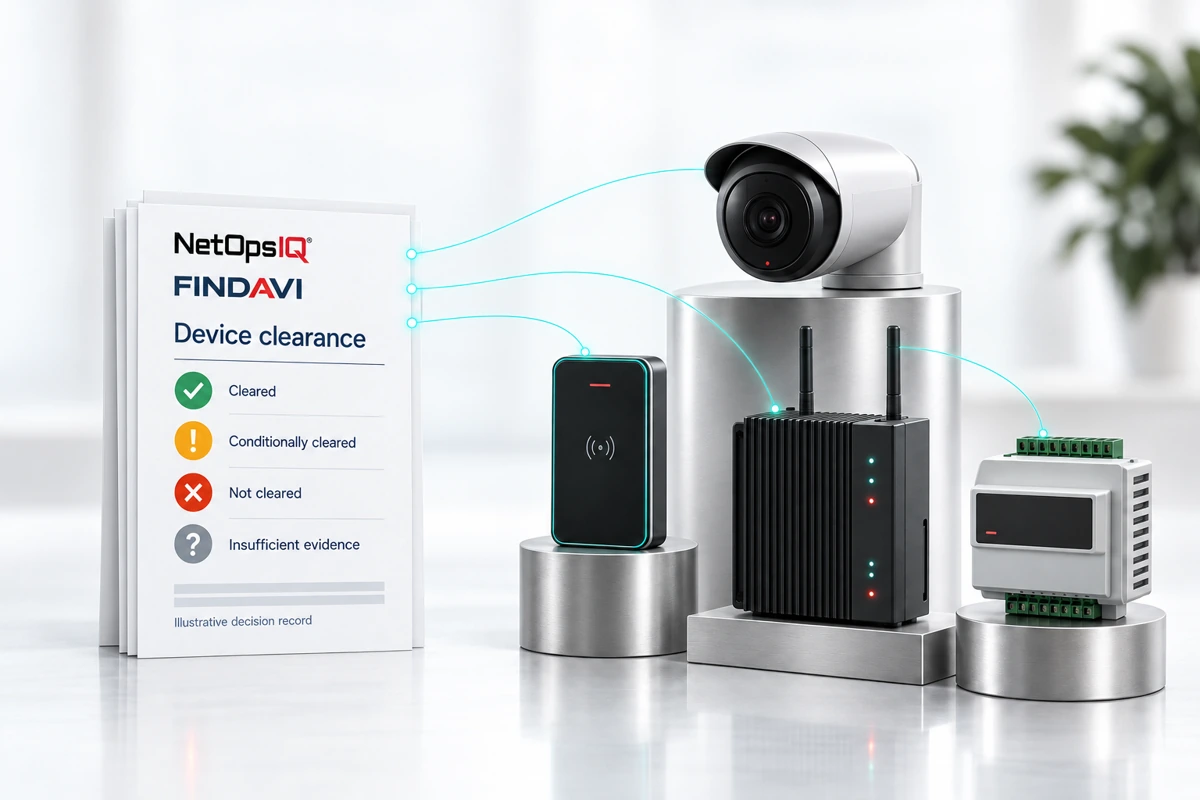
The decision record
Yes for the tested use. We found no issues that block it.
Yes, after you meet the conditions in the report. These might include updating the firmware or restricting access.
You get a specific action list and a way to check completion.No. Don’t use the device as planned.
We explain what failed, what needs to change, and what to retest.Not sure yet. We could not test enough to decide.
We tell you what is missing and how to reach a decision.How it works
Identify the device, firmware, intended use, and decision needed.
Agree what we will test, what access is needed, and what the device must do.
Perform agreed checks and record findings, evidence, and incomplete tests.
Give a clear outcome, explain why, and identify who approves deployment.
Deliver the findings, evidence, conditions, and next steps together.
Set the next review date and change events that trigger earlier testing.
The deliverable
Model, firmware, configuration, ownership, and intended environment.
Permitted tests, methods, acceptance criteria, exclusions, and test dates.
What was checked, what was observed, evidence references, and incomplete work.
One of four outcomes, known blocking findings, and the named decision owner.
Restrictions, required actions, accountable owners, and due dates.
An agreed review date and events that require reassessment sooner.
FOR PROCUREMENT & RISK TEAMS
Testing after a device is installed is costly and disruptive. Test it first, and the findings become leverage while you still have purchasing choices.
Check that the model, software version and intended use in the report match what you are buying. A different configuration may need another review.
Review how the vendor ships updates, handles reported problems and supports the device over its life. Include data handling in that conversation.
If a device is conditionally cleared, put those conditions in the purchase terms, with an owner for each and a way to check it.
One record shows security, procurement and oversight teams the same evidence, so nobody rebuilds the decision from emails and spreadsheets.
DEVICE ASSESSMENT
We reviewed a drone’s software and tested the device in an authorized lab. The tests showed that stored device data could be accessed. They also showed which suspected problems could not be confirmed.
The report explained what we found, what still needed testing, and what should change before a decision about using the drone.
Review the assessment summaryQUESTIONS
Our tests found no issues that block the use described in the report. You get the findings and evidence so your team can review the decision.
Conditional clearance gives you a decision with specific requirements to meet. Insufficient evidence means a test or access is missing, so we cannot reach a decision yet. In either case, we explain the next step.
A software update, new configuration, different use, or newly identified threat can change the answer. Your report lists the changes that call for retesting and the next review date.
Device Clearance works alongside your normal certification, regulatory, procurement, and insurance reviews. Your authorized owner makes the deployment decision using the findings and any conditions in the report.
Tell us the model, software version, and intended use. We check which tests we can perform and agree on access with the device owner. You approve the testing plan before work starts; any changes need separate approval.
Tell us what you plan to connect. Get a clear decision and the evidence to review it.